Verbs that start with the letter Z may be few in number, but they bring a unique spark to the English language. These action words, though less common, can make your vocabulary more colorful, expressive, and engaging. From playful words like “zoom” to more specific terms used in science and everyday conversation, Z-verbs add variety and creativity to both writing and speaking. For young learners especially, discovering these rare verbs can feel exciting, like finding hidden treasures that make language learning more fun and memorable.
Understanding Verbs That Start With Letter Z
Verbs that start with the letter Z are quite rare in English, but they still play an interesting and useful role in vocabulary building. Like all verbs, Z-verbs describe actions, processes, or states of being. Many of these words are often found in informal language, technology, or specific contexts; for example, “zoom” (to move quickly) or “zap” (to destroy or hit suddenly). Because they are less common, learning Z-verbs can make your language more unique and expressive. For beginners and young learners, these verbs are also fun to explore, as they often sound lively and energetic, making learning more engaging and memorable.
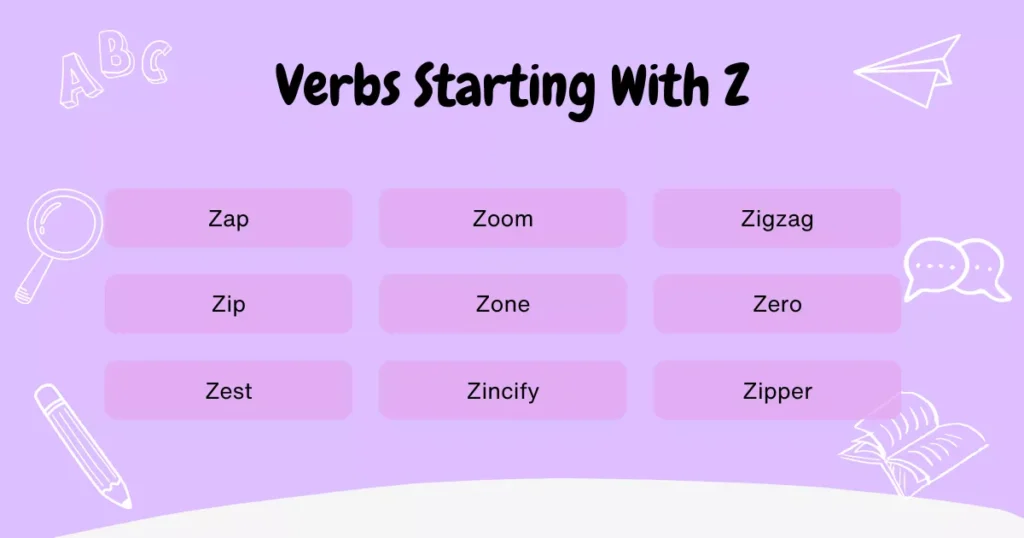
List of Common Verbs Starting With Z
- Zap – to hit or destroy suddenly
Example: He zapped the mosquito with a spray. - Zoom – to move very fast
Example: The car zoomed down the road. - Zip – to move quickly or fasten with a zipper
Example: She zipped her jacket before going out. - Zigzag – to move in a pattern with sharp turns
Example: The rabbit zigzagged across the field. - Zest – to add flavor or excitement
Example: Add lemon to zest the dish. - Zero – to reduce to nothing
Example: The company zeroed its losses. - Zone – to divide into sections
Example: The city was zoned for housing. - Zonk – to make someone very tired or unconscious
Example: The long trip zonked him out. - Zing – to move quickly with a sharp sound
Example: The bullet zinged past. - Zing up – to make more exciting
Example: Add music to zing up the party. - Zoom in – to focus closely
Example: The camera zoomed in on the bird. - Zoom out – to move away from focus
Example: Zoom out to see the full picture. - Zipper – to close using a zipper
Example: He zippered his bag. - Zhoosh – to style or improve appearance
Example: She zhooshed her hair. - Zinc – to coat with zinc
Example: The metal was zinced to prevent rust. - Zither – to play a musical instrument
Example: He zithered a soft tune. - Zombify – to make lifeless or dull
Example: Too much work zombified him. - Zonk out – to fall asleep quickly
Example: I zonked out after dinner. - Zoom past – to pass quickly
Example: The train zoomed past us. - Zig – to move sharply in one direction
Example: The player zigged left. - Zag – to move sharply in another direction
Example: Then he zagged right. - Zest up – to make lively
Example: Decorations zest up the room. - Zero in – to focus on something
Example: The detective zeroed in on the clue. - Zap away – to remove quickly
Example: The tool zapped away dirt. - Zoom along – to move smoothly and fast
Example: The bike zoomed along the road. - Zip along – to travel quickly
Example: Boats zipped along the river. - Zing across – to move swiftly across
Example: The ball zinged across the field. - Zigzag through – to move through in turns
Example: He zigzagged through traffic. - Zest with – to add flavor
Example: Zest the cake with orange peel. - Zone out – to lose focus
Example: He zoned out during the lecture.
You May Also Like: Verbs That Start With W
Action Verbs That Start With Z
- Zap – to strike suddenly
Example: She zapped the bug. - Zoom – to move fast
Example: The plane zoomed overhead. - Zip – to move quickly
Example: He zipped across the street. - Zigzag – to move sharply
Example: The skier zigzagged downhill. - Zing – to move fast with sound
Example: The arrow zinged through air. - Zonk – to exhaust
Example: Work zonked him out. - Zhoosh – to style
Example: She zhooshed her dress. - Zero in – to focus
Example: They zeroed in on the target. - Zoom in – to focus closely
Example: Zoom in on the image. - Zoom out – to widen view
Example: Zoom out for a better look. - Zip up – to fasten
Example: Zip up your coat. - Zig – turn sharply
Example: He zigged suddenly. - Zag – turn opposite
Example: Then he zagged back. - Zest – add excitement
Example: Zest your writing. - Zap away – remove
Example: Zap away errors. - Zoom off – leave quickly
Example: She zoomed off in a taxi. - Zip past – pass quickly
Example: Cars zipped past. - Zing by – pass fast
Example: Time zinged by. - Zigzag around – move irregularly
Example: They zigzagged around obstacles. - Zonk out – fall asleep
Example: He zonked out early.
Positive and Motivational Verbs With Z
- Zest – to add energy
Example: Zest your life with positivity. - Zest up – make exciting
Example: Zest up your routine. - Zero in – focus clearly
Example: Zero in on your goals. - Zoom ahead – progress fast
Example: She zoomed ahead in her career. - Zing – add excitement
Example: Zing your ideas with creativity. - Zhoosh – improve style
Example: Zhoosh your presentation. - Zip forward – move quickly ahead
Example: Zip forward with confidence. - Zoom through – complete quickly
Example: Zoom through your tasks. - Zestfully act – act energetically
Example: Work zestfully every day. - Zero out doubts – remove doubts
Example: Zero out negative thoughts. - Zing up life – add joy
Example: Zing up your daily routine. - Zoom upward – grow rapidly
Example: Your skills will zoom upward. - Zest for – show enthusiasm
Example: Have a zest for learning. - Zip into action – act quickly
Example: Zip into action when needed. - Zero in on success – focus on success
Example: Zero in on success daily. - Zing with energy – be lively
Example: He zinged with excitement. - Zoom beyond limits – exceed limits
Example: Zoom beyond your fears. - Zest your mindset – energize thinking
Example: Zest your mindset with positivity. - Zip toward goals – move fast toward goals
Example: Zip toward your dreams. - Zing up efforts – improve efforts
Example: Zing up your hard work.
Regular and Irregular Verbs Starting With Z
- Zap (R) – hit suddenly
Example: He zapped the fly. - Zoom (R) – move fast
Example: She zoomed past. - Zip (R) – fasten/move fast
Example: He zipped the bag. - Zigzag (R) – move sharply
Example: They zigzagged uphill. - Zest (R) – add flavor
Example: She zested the lemon. - Zero (R) – reduce to nothing
Example: They zeroed the balance. - Zone (R) – divide area
Example: The land was zoned. - Zing (R) – move quickly
Example: The ball zinged by. - Zonk (R) – exhaust
Example: Work zonked him. - Zhoosh (R) – improve style
Example: She zhooshed her look. - Zinc (R) – coat with zinc
Example: The pipe was zinced. - Zipper (R) – fasten
Example: He zippered his coat. - Zombify (R) – make dull
Example: Stress zombified him. - Zoom in (R) – focus
Example: He zoomed in. - Zoom out (R) – widen view
Example: She zoomed out. - Zero in (R) – focus
Example: They zeroed in. - Zonk out (R) – sleep quickly
Example: He zonked out. - Zip up (R) – fasten
Example: She zipped up her jacket. - Zig (R) – turn sharply
Example: He zigged left. - Zag (R) – turn opposite
Example: He zagged right. - Zing up (R) – make lively
Example: Music zinged up the event. - Zip along (R) – move fast
Example: They zipped along. - Zoom ahead (R) – progress fast
Example: He zoomed ahead. - Zest up (R) – make exciting
Example: They zested up the dish. - Zing across (R) – move quickly
Example: It zinged across. - Zip past (R) – pass fast
Example: Cars zipped past. - Zoom off (R) – leave fast
Example: She zoomed off. - Zigzag through (R) – move in turns
Example: They zigzagged through traffic. - Zest with (R) – add flavor
Example: Zest with lemon. - Zone out (R) – lose focus
Example: He zoned out.
You May Also Like: Verbs That Start With X
Phrasal Verbs That Start With Z
| Verb | Meaning | Example |
|---|---|---|
| Zap away | remove quickly | The cleaner zapped away the stain. |
| Zap out | eliminate suddenly | The system zapped out the error. |
| Zoom in | focus closely | Zoom in on the details. |
| Zoom out | show a wider view | Zoom out to see everything. |
| Zoom off | leave quickly | He zoomed off on his bike. |
| Zoom past | pass very fast | Cars zoomed past us. |
| Zoom by | go by quickly | Time zoomed by during vacation. |
| Zip up | fasten with a zipper | Zip up your jacket. |
| Zip along | move quickly | The car zipped along the highway. |
| Zip past | move past quickly | A runner zipped past me. |
| Zip through | finish quickly | She zipped through her homework. |
| Zip off | leave suddenly | He zipped off without saying goodbye. |
| Zing by | pass quickly | The ball zinged by my head. |
| Zing across | move quickly across | The arrow zinged across the field. |
| Zing up | make more exciting | Music zinged up the party. |
| Zero in on | focus on something | The detective zeroed in on the clue. |
| Zero out | reduce to zero | They zeroed out the debt. |
| Zone out | lose focus | He zoned out during class. |
| Zone in | focus attention | Try to zone in on your work. |
| Zonk out | fall asleep quickly | I zonked out after dinner. |
| Zonk off | go to sleep | He zonked off on the couch. |
| Zest up | make lively | Add spices to zest up the dish. |
| Zing off | leave quickly | She zinged off after the meeting. |
| Zip back | return quickly | He zipped back home. |
| Zoom ahead | progress rapidly | She zoomed ahead in her career. |
Professional, Academic, and Technical Z Verbs
- Zero – reset or reduce to zero
Example: Zero the machine before use. - Zero in – focus precisely
Example: Researchers zeroed in on the data. - Zone – divide into sections
Example: The city is zoned for industry. - Zoning – regulating land use
Example: Authorities are zoning new areas. - Zinc – coat with zinc
Example: The metal was zinced to prevent rust. - Zipper – fasten using a mechanism
Example: The system zippered files together. - Zip – compress digital files
Example: Zip the folder before sending. - Zipping – compressing files
Example: He is zipping large data files. - Zoom – enlarge or reduce view
Example: Zoom the image for clarity. - Zoom in – magnify view
Example: Zoom in to examine details. - Zoom out – reduce magnification
Example: Zoom out for context. - Z-test – apply statistical test
Example: They z-tested the hypothesis. - Z-score – standardize values
Example: The data was z-scored. - Zigzag – move irregularly (robotics/engineering)
Example: The robot zigzagged around obstacles. - Z-transform – convert signals (math/engineering)
Example: Engineers z-transformed the signal. - Z-buffer – manage depth in graphics
Example: The system z-buffered the image. - Zonalize – divide into zones
Example: The map was zonalized. - Zerorize – reduce to zero
Example: The algorithm zerorized errors. - Zig – change direction sharply
Example: The algorithm zigged to adjust. - Zag – move in opposite direction
Example: Then it zagged to compensate. - Zettabyte-scale – measure huge data
Example: Systems zettabyte-scale data daily. - Zonal regulate – control by zones
Example: Traffic is zonally regulated. - Zincify – treat with zinc
Example: The material was zincified. - Z-order – arrange layers
Example: The designer z-ordered elements. - Zero-base – start from scratch
Example: They zero-based the budget.
Emotional, Creative, and Descriptive Z Verbs
- Zest – add excitement
Example: Zest your life with joy. - Zest up – make lively
Example: Music zested up the party. - Zing – add energy or excitement
Example: His words zinged with humor. - Zing up – make more interesting
Example: Add colors to zing up your art. - Zhoosh – style or improve
Example: She zhooshed her outfit. - Zazz up – make flashy
Example: He zazzed up his presentation. - Zing with – be full of energy
Example: The room zinged with excitement. - Zest for – show enthusiasm
Example: She has a zest for life. - Zonk – exhaust emotionally
Example: The stress zonked him. - Zombify – make dull or lifeless
Example: Routine work zombified him. - Zone out – mentally drift away
Example: He zoned out during the lecture. - Zany – act in a silly way
Example: He zany-acted to entertain kids. - Zigzag – shift emotionally
Example: Her mood zigzagged all day. - Zoom – rise quickly (emotionally)
Example: His confidence zoomed up. - Zestfully act – act energetically
Example: She zestfully completed tasks. - Zing across – move creatively
Example: Ideas zinged across his mind. - Zhoosh up – improve creatively
Example: She zhooshed up her design. - Zing out – express sharply
Example: He zinged out a witty reply. - Zestfully enjoy – enjoy with energy
Example: They zestfully enjoyed the party. - Zoom into – get deeply involved
Example: She zoomed into her passion. - Zany around – behave playfully
Example: Kids zany around happily. - Zest through – move energetically
Example: He zested through his work. - Zing together – connect energetically
Example: Their ideas zinged together. - Zest forward – move ahead with energy
Example: She zested forward in life. - Zing back – respond quickly
Example: She zinged back a clever answer.
Rare, Unique, and Advanced Verbs That Start With Z
- Zhoosh – improve appearance
Example: She zhooshed her hair. - Zizz – sleep lightly
Example: He zizzed after lunch. - Zizz out – fall asleep
Example: She zizzed out quickly. - Zany – behave foolishly
Example: He zany-acted in the show. - Zig – move sharply
Example: The player zigged left. - Zag – turn sharply opposite
Example: Then he zagged right. - Zest – add flavor or energy
Example: Zest the dish with lemon. - Zincify – coat with zinc
Example: The pipe was zincified. - Zonalize – divide into zones
Example: The land was zonalized. - Zoot – move energetically (slang)
Example: He zooted across the stage. - Zonk – exhaust
Example: The trip zonked them. - Zonk out – sleep suddenly
Example: He zonked out instantly. - Zing – move quickly
Example: The ball zinged past. - Zombify – make lifeless
Example: Routine zombified him. - Zigzag – move in sharp turns
Example: The car zigzagged downhill. - Zest up – add excitement
Example: They zested up the event. - Zing up – make lively
Example: Music zinged up the mood. - Zip – move quickly
Example: She zipped away. - Zoom – move fast
Example: The plane zoomed overhead. - Zither – play a zither
Example: He zithered softly. - Zizzle – sizzle lightly
Example: The food zizzled on the pan. - Zhoosh up – enhance style
Example: She zhooshed up her look. - Zing off – leave quickly
Example: He zinged off suddenly. - Zany about – behave wildly
Example: They zany about on stage. - Zestfully perform – perform energetically
Example: She zestfully performed.
You May Also Like: Verbs That Start With X
Common Mistakes When Using Z Verbs
- Overusing Rare Z Verbs in Formal Writing
Many Z verbs like “zany” or “zhoosh” are informal. Using them in academic or professional writing can sound unprofessional.
Tip: Choose simpler or more formal alternatives when needed. - Confusing Similar-Sounding Z Verbs
Words like “zip,” “zap,” and “zing” may sound alike but have different meanings.
Tip: Always check the exact meaning before using them in sentences. - Incorrect Phrasal Verb Usage
Learners often misuse phrases like “zero in on” or “zone out.”
Tip: Learn phrasal verbs as complete expressions instead of translating word-by-word. - Using Non-Standard or Slang Forms Incorrectly
Some Z verbs (e.g., “zoot,” “zazz up”) are slang and not widely accepted in all contexts.
Tip: Use them only in casual conversation or creative writing. - Forgetting Verb Forms (Tense Errors)
Even simple Z verbs like “zip” or “zoom” can be used incorrectly in past or continuous forms.
Tip: Practice correct forms (e.g., zipped, zooming) to avoid mistakes.
Fun Facts About Verbs That Begin With Z
- Z is the Least Common Starting Letter for Verbs
Very few English verbs begin with Z compared to other letters. - Many Z Verbs Sound Energetic
Words like “zoom,” “zap,” and “zing” naturally sound fast and lively. - Some Z Verbs Come from Slang or Modern Usage
Verbs like “zhoosh” became popular through media and pop culture. - Z Verbs Are Often Easy to Remember
Because they are rare and unique, learners tend to remember them more easily. - Z Verbs Are Popular in Kids’ Learning
Their fun sound makes them great for teaching vocabulary to young learners.
FAQs
Conclusion
Verbs that start with the letter Z may be rare, but they add a unique and lively touch to the English language. From common action verbs like “zoom” and “zip” to expressive words like “zest” and “zing,” these verbs help make communication more dynamic and engaging. Whether you’re a beginner, a student, or a writer looking to expand your vocabulary, learning Z verbs can give your language a creative edge. By understanding their meanings, usage, and context, you can confidently use even the most uncommon verbs in everyday conversation and writing.