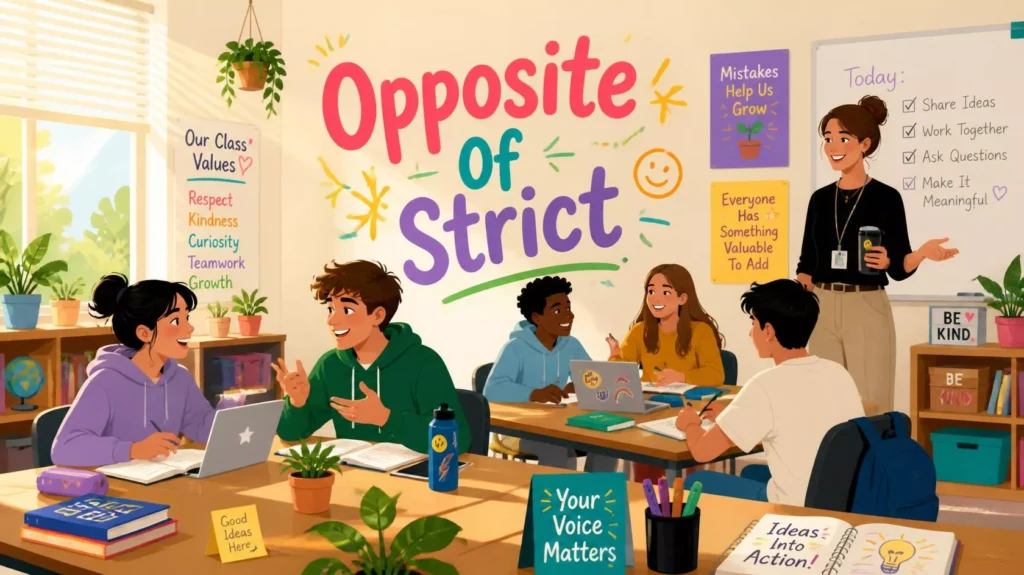
Learning opposite words is one of the best ways to improve your English vocabulary and communication skills. Antonyms not only help you understand the exact meaning of a word, but they also make your speaking and writing more expressive and natural. The word strict is commonly used to describe someone who follows rules firmly and expects discipline, order, and obedience. Its opposite words describe a more relaxed, flexible, or easygoing attitude. Common antonyms of strict include lenient, tolerant, permissive, flexible, and easygoing. For example, a lenient teacher may allow students more freedom, while a strict teacher closely follows rules and expectations.
What Does Strict Mean?
The word strict describes someone or something that strongly follows rules, discipline, or high standards. A strict person expects obedience and does not easily allow exceptions or mistakes. The word is often used for teachers, parents, school policies, workplace rules, or personal behavior. For example, a strict teacher may expect students to complete all assignments on time and follow classroom rules carefully.
Why Knowing the Opposite of Strict Matters
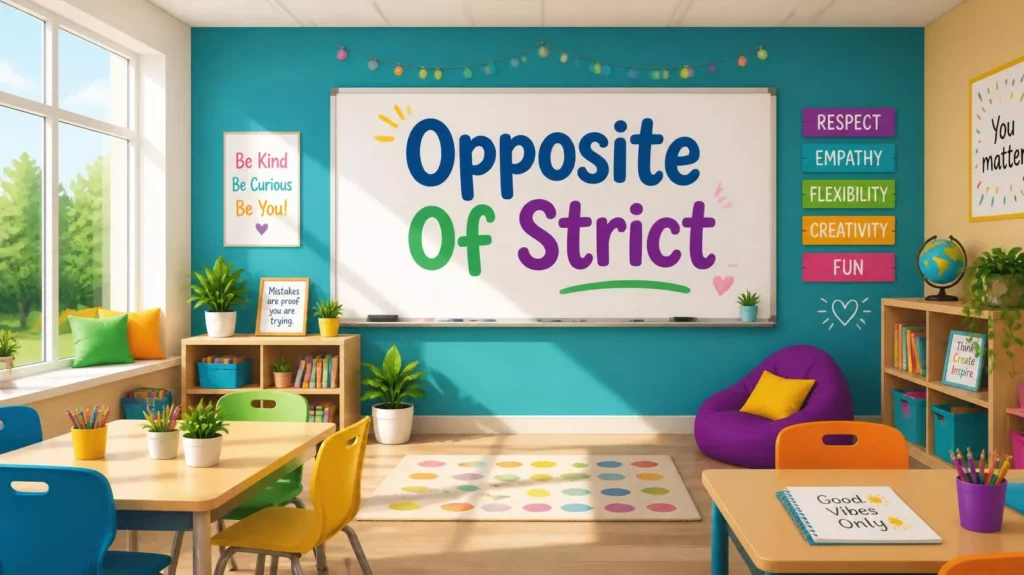
Learning the opposite of strict helps you express ideas more clearly and accurately in English. It allows you to describe people, rules, or situations that are more relaxed, flexible, or forgiving. Knowing antonyms such as lenient, easygoing, and tolerant also improves your vocabulary and makes your speaking and writing more natural. Understanding both a word and its opposite can help you communicate with greater confidence in everyday conversations, schoolwork, and professional settings.
Everyday Opposites of Strict
- Lenient – Not harsh or severe with rules.
Example: The lenient coach allowed the players extra practice time. - Easygoing – Relaxed and not demanding.
Example: My uncle is easygoing and rarely gets angry. - Flexible – Willing to change rules or plans when needed.
Example: The manager was flexible about office timings. - Tolerant – Accepting different behaviors or opinions.
Example: She is tolerant of small mistakes. - Permissive – Allowing a lot of freedom.
Example: The school has a permissive dress code. - Relaxed – Calm and free from pressure.
Example: The classroom atmosphere was relaxed and friendly. - Laid-back – Calm and unconcerned about rules.
Example: He has a laid-back parenting style. - Gentle – Soft and kind in behavior.
Example: The gentle teacher explained the lesson patiently. - Soft – Not harsh or forceful.
Example: Her soft approach helped solve the problem peacefully. - Forgiving – Ready to excuse mistakes.
Example: My grandmother is forgiving when we make errors. - Patient – Able to stay calm without getting upset.
Example: The patient instructor repeated the directions slowly. - Understanding – Sympathetic and considerate.
Example: The principal was understanding about the late submission. - Open-minded – Willing to accept new ideas.
Example: Open-minded parents encourage discussion. - Casual – Informal and relaxed.
Example: The office has a casual work environment. - Free – Without many restrictions.
Example: Students felt free to express their opinions. - Kind – Caring and thoughtful.
Example: The kind babysitter never shouted at the children. - Calm – Peaceful and controlled.
Example: The calm referee handled the game fairly. - Balanced – Fair and reasonable.
Example: She takes a balanced approach to discipline. - Adaptable – Able to adjust easily.
Example: The adaptable coach changed the training schedule. - Accepting – Welcoming without judgment.
Example: The teacher was accepting of different learning styles. - Broad-minded – Tolerant of different ideas and lifestyles.
Example: His broad-minded attitude made everyone comfortable. - Uncritical – Not quick to judge or criticize.
Example: Her uncritical nature helped build confidence in students. - Merciful – Showing compassion instead of punishment.
Example: The judge was merciful toward the young offender. - Compassionate – Showing care and sympathy.
Example: The compassionate nurse comforted the patient. - Lighthearted – Cheerful and carefree.
Example: The lighthearted teacher made learning fun. - Informal – Relaxed and not highly controlled.
Example: The meeting was informal and friendly. - Unfussy – Simple and not demanding.
Example: He is unfussy about household rules. - Friendly – Warm and approachable.
Example: The friendly supervisor listened to everyone’s ideas. - Mild – Gentle and not severe.
Example: The school gave only a mild warning. - Liberal – Open to change and freedom.
Example: The liberal policy gave employees flexible hours. - Pleasant – Easy to deal with.
Example: The pleasant manager created a stress-free workplace. - Sympathetic – Showing understanding and concern.
Example: The sympathetic teacher gave the student another chance. - Good-natured – Naturally kind and cheerful.
Example: His good-natured attitude made him popular. - Easy – Not difficult or demanding.
Example: The professor was easy with deadlines this semester. - Carefree – Free from stress or strict control.
Example: The children enjoyed a carefree holiday.
You May Also Like: Opposite of Perspective
Behavioral Opposites of Strict
- Relaxed – Calm and not controlling.
Example: Her relaxed attitude reduced everyone’s stress. - Patient – Calm while dealing with delays or mistakes.
Example: The patient father listened carefully to his son. - Forgiving – Willing to excuse faults.
Example: She was forgiving after the misunderstanding. - Understanding – Empathetic toward others.
Example: The coach was understanding about the injury. - Gentle – Kind and mild in behavior.
Example: The gentle doctor spoke softly to the child. - Easygoing – Relaxed and tolerant.
Example: Our easygoing neighbor never complains about noise. - Flexible – Ready to adapt to situations.
Example: The flexible boss allowed remote work. - Open-minded – Accepting new ideas and opinions.
Example: An open-minded leader encourages creativity. - Calm – Peaceful and composed.
Example: The calm teacher handled the argument wisely. - Compassionate – Caring about others’ feelings.
Example: The compassionate counselor supported the students. - Tolerant – Accepting differences without anger.
Example: Tolerant parents encourage individuality. - Supportive – Helpful and encouraging.
Example: Her supportive mentor motivated her to improve.
Social & Cultural Strict Opposites
- Liberal – Favoring freedom and openness.
Example: The country has liberal education policies. - Progressive – Supporting social change and new ideas.
Example: The progressive school encourages creativity. - Open-minded – Accepting different beliefs and lifestyles.
Example: Open-minded communities welcome diversity. - Permissive – Allowing more personal freedom.
Example: The permissive culture gives teenagers independence. - Inclusive – Welcoming all people equally.
Example: The company promotes an inclusive workplace. - Tolerant – Respectful of differences.
Example: A tolerant society values different opinions. - Flexible – Adaptable to changing situations.
Example: Flexible traditions evolve over time. - Modern – Following current ideas rather than rigid customs.
Example: The school follows a modern teaching style. - Accepting – Nonjudgmental toward others.
Example: The community is accepting of cultural differences. - Free-thinking – Forming independent opinions.
Example: Free-thinking students often question old traditions. - Casual – Informal and relaxed socially.
Example: The event had a casual dress code. - Democratic – Allowing shared decision-making.
Example: The democratic leader listened to everyone’s ideas.
Formal & Informal Antonyms For Strict
- Lenient (Formal) – Less severe with rules.
Example: The judge was lenient with the first-time offender. - Permissive (Formal) – Allowing freedom.
Example: The permissive policy reduced stress among workers. - Flexible (Formal) – Open to adjustment.
Example: The company offers flexible schedules. - Tolerant (Formal) – Accepting differences.
Example: A tolerant society respects diversity. - Liberal (Formal) – Open and broad-minded.
Example: The university has liberal admission policies. - Relaxed (Informal) – Calm and easygoing.
Example: The rules became more relaxed after the holiday. - Laid-back (Informal) – Very easygoing.
Example: He’s too laid-back to worry about small issues. - Chill (Informal) – Calm and unconcerned.
Example: Our coach is pretty chill during practice. - Cool (Informal) – Calm and accepting.
Example: My parents are cool about my music choices. - Easygoing (Informal) – Relaxed in attitude.
Example: She has an easygoing personality. - Casual (Informal) – Informal and relaxed.
Example: Fridays are casual at the office. - Mellow (Informal) – Soft and relaxed in nature.
Example: He became mellow as he grew older.
Positive & Negative Antonyms For Strict
| Antonym | Meaning | Example |
|---|---|---|
| Understanding | Showing empathy | The understanding teacher listened carefully. |
| Compassionate | Caring and sympathetic | A compassionate manager supports employees. |
| Flexible | Adaptable and reasonable | Flexible rules improved teamwork. |
| Patient | Calm during difficulties | The patient coach encouraged beginners. |
| Balanced | Fair and moderate | She uses a balanced parenting style. |
| Supportive | Helpful and encouraging | Supportive teachers inspire confidence. |
| Careless | Not paying enough attention | The careless supervisor ignored safety rules. |
| Irresponsible | Not dependable or disciplined | His irresponsible behavior caused problems. |
| Negligent | Failing to give proper care | The negligent employee missed important deadlines. |
| Weak | Lacking control or firmness | Weak leadership created confusion in the team. |
| Undisciplined | Not controlled or organized | The undisciplined class became noisy quickly. |
| Disorganized | Lacking order or structure | The disorganized office struggled to meet goals. |
You May Also Like: Opposite of Misery
Tips For Using Antonyms of Strict in the Right Way
- Choose the Antonym Based on the Situation
Different antonyms of strict fit different contexts. For example, lenient is often used for rules or discipline, while easygoing is better for describing personalities.
Example:
The principal was lenient about late homework.
My uncle is very easygoing and relaxed. - Match the Tone of Your Sentence
Some antonyms are formal, while others are informal. Use formal words like tolerant or flexible in academic or professional writing, and informal words like laid-back or chill in casual conversations.
Example:
The company has a flexible work policy.
Our coach is pretty laid-back during practice. - Understand the Exact Meaning
Not all opposites of strict mean the same thing. Permissive can suggest too much freedom, while understanding has a kinder meaning.
Example:
The teacher was understanding when I explained my problem.
Some parents are too permissive with screen time. - Use Natural Real-Life Examples
Practice antonyms in everyday situations like school, parenting, friendships, or work. This helps you remember them more easily.
Example: My manager is flexible about deadlines when emergencies happen. - Learn Antonyms Together With Synonyms
Studying related words together improves vocabulary faster and helps you speak more naturally.
Example: Strict → lenient, relaxed, tolerant, easygoing
Common Mistakes When Using Strict Antonyms
- Using Informal Words in Formal Writing
Words like chill or laid-back sound too casual in essays or professional documents.
Incorrect: The professor is very chill about attendance.
Correct: The professor is very flexible about attendance. - Confusing “Lenient” With “Weak”
Lenient means kind or less harsh, not lacking authority.
Incorrect: The coach is weak with the players.
Correct: The coach is lenient with the players. - Using the Wrong Antonym for Personality
Some words describe behavior, while others describe rules or systems.
Incorrect: The school has an easygoing policy.
Correct: The school has a flexible policy. - Assuming Every Opposite Means Positive
Not all antonyms of strict have good meanings. Words like careless or irresponsible can be negative.
Example: A flexible teacher can be positive.
Correct: A careless teacher can create problems. - Overusing One Antonym Repeatedly
Using only one word like lenient again and again can make writing repetitive. Try using a variety of antonyms.
Example: Instead of repeating lenient, also use tolerant, relaxed, understanding, or easygoing.
You May Also Like: Opposite of Opinion
Test Yourself With Quiz For Antonyms of Strict
1. Which word is the best opposite of strict?
a) Harsh
b) Lenient
c) Serious
d) Firm
Answer: b) Lenient
2. Which antonym of strict means “relaxed and calm”?
a) Flexible
b) Easygoing
c) Demanding
d) Severe
Answer: b) Easygoing
3. Which word describes someone who allows too much freedom?
a) Permissive
b) Strict
c) Organized
d) Disciplined
Answer: a) Permissive
4. Fill in the blank:
“The teacher was very __________ and allowed students to submit homework late.”
a) Harsh
b) Flexible
c) Strict
d) Rigid
Answer: b) Flexible
5. Which antonym of strict is most suitable for formal writing?
a) Chill
b) Laid-back
c) Tolerant
d) Cool
Answer: c) Tolerant
6. Which word means “kind and understanding instead of severe”?
a) Forgiving
b) Strict
c) Demanding
d) Tough
Answer: a) Forgiving
7. Choose the informal antonym of strict.
a) Permissive
b) Flexible
c) Laid-back
d) Tolerant
Answer: c) Laid-back
8. Which sentence uses an antonym of strict correctly?
a) The relaxed officer punished everyone harshly.
b) The easygoing coach let players enjoy practice.
c) The strict teacher ignored all rules.
d) The rigid manager allowed complete freedom.
Answer: b) The easygoing coach let players enjoy practice.
9. Which antonym of strict has a negative meaning?
a) Compassionate
b) Understanding
c) Careless
d) Flexible
Answer: c) Careless
10. Fill in the blank:
“My parents are very __________ and allow me to make my own decisions.”
a) Severe
b) Permissive
c) Harsh
d) Rigid
Answer: b) Permissive
FAQs
Conclusion
Understanding the opposites of strict can greatly improve your English vocabulary and communication skills. Words like lenient, flexible, easygoing, tolerant, and permissive help describe people, rules, and situations that are more relaxed and open-minded. Learning these antonyms not only makes your speaking and writing more natural, but also helps you express ideas with greater accuracy and variety. Whether you are talking about parenting styles, school policies, workplace environments, or personalities, knowing the right opposite of strict allows you to communicate more confidently in everyday English.