Verbs that start with K may seem rare, but they play an important role in making English more expressive and dynamic. From everyday actions like keep and know to more vivid verbs like knock, kneel, and kick, these words help describe movement, emotions, and real-life situations with clarity. Because they are less commonly used, K-verbs can also add freshness and creativity to your writing and speech. Whether you’re a beginner building vocabulary, a student preparing for assignments, or a writer looking to enhance your word choice, these K-verbs will help you communicate more effectively and confidently.
Understanding Verbs That Start With Letter K
Verbs that start with the letter K are not very common, but they are still useful in everyday English. These verbs describe actions, states, or processes, such as keep (to hold or continue), know (to understand or be aware), and kneel (to go down on one’s knees). Many K-verbs are simple and practical, making them easy to use in daily conversation and writing. Learning them helps expand vocabulary, improve sentence variety, and add a unique touch to communication.
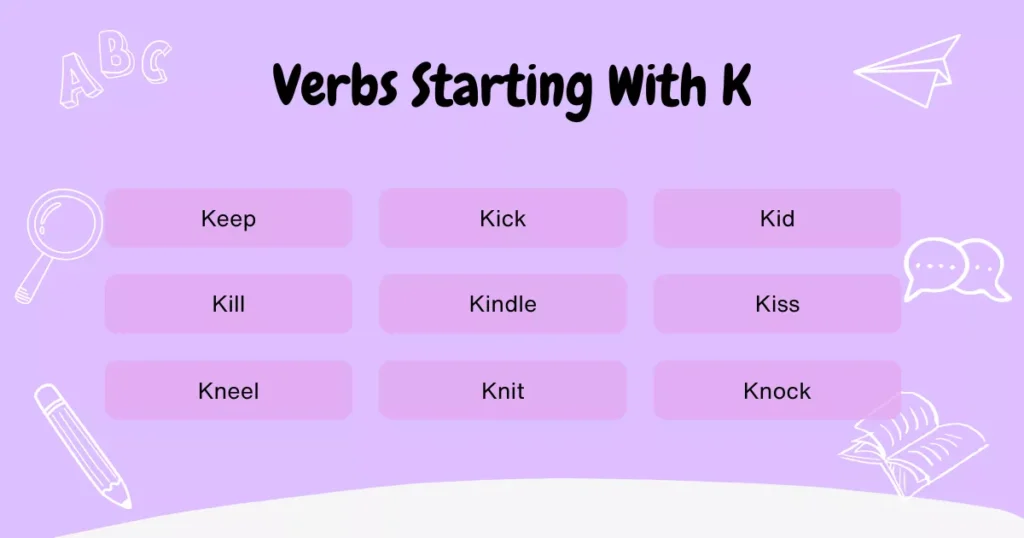
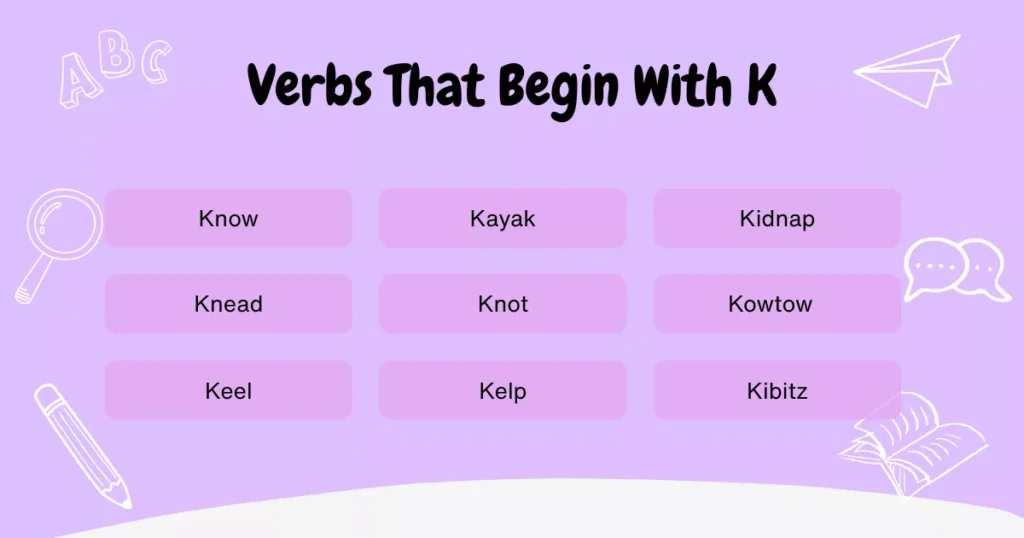
List of Common Verbs Starting With K
- Keep – to hold or continue
Example: She keeps her promises. - Know – to understand or be aware
Example: I know the answer. - Kick – to strike with the foot
Example: He kicked the ball. - Kill – to cause death
Example: The hunter killed the animal. - Kneel – to go down on knees
Example: They knelt to pray. - Knock – to hit a surface
Example: Someone knocked on the door. - Knit – to make fabric with yarn
Example: She knits sweaters. - Knot – to tie into a knot
Example: He knotted the rope. - Kiss – to touch with lips
Example: She kissed her child. - Key – to fasten or secure
Example: He keyed the lock carefully. - Kayak – to travel in a kayak
Example: They kayaked across the lake. - Keen – to sharpen or wail
Example: The knife was keenly sharpened. - Kettle – to heat or boil (rare)
Example: Water kettled on the stove. - Kid – to joke or tease
Example: I was just kidding you. - Knap – to shape stone
Example: They knapped tools from flint. - Kink – to twist or curl
Example: The wire kinked suddenly. - Knead – to work dough
Example: She kneads the dough well. - Knuckle – to press or yield
Example: He knuckled under pressure. - Kibitz – to offer unwanted advice
Example: He kept kibitzing during the game. - Keel – to fall over
Example: He nearly keeled over from heat. - Kernel – to form a core (rare)
Example: The idea kernaled into a plan. - Kedge – to move a ship
Example: They kedged the boat forward. - Kayo – to knock out
Example: The boxer kayoed his opponent. - Kite – to soar or glide
Example: The bird kited in the sky. - Knell – to ring (bell)
Example: The bells knelled at noon. - Knobble – to tamper or weaken
Example: They tried to knobble the plan. - Knockdown – to defeat
Example: The team knocked down its rivals. - Kraal – to enclose animals
Example: They kraaled the cattle. - Kneecap – to disable
Example: The injury kneecapped his career. - Kickstart – to begin something
Example: This fund will kickstart the project.
You May Also Like: Verbs That Start With H
Action Verbs That Start With K
- Kick – strike with foot
Example: He kicked the door open. - Knock – hit forcefully
Example: She knocked loudly. - Knead – work dough
Example: Knead the mixture well. - Knit – create with yarn
Example: She knits daily. - Knot – tie tightly
Example: Knot the rope firmly. - Kneel – bend knees
Example: He knelt respectfully. - Kayo – knock out
Example: The fighter kayoed him. - Kidnap – abduct
Example: They kidnapped the victim. - Kink – twist
Example: The pipe kinked. - Keel – fall over
Example: He keeled forward. - Kite – glide or fly
Example: The bird kited above. - Knuckle – strike
Example: He knuckled the wall. - Key – adjust
Example: Key the settings properly. - Kickstart – begin forcefully
Example: Kickstart the engine. - Knuckle down – focus
Example: Students knuckle down before exams. - Keep – hold
Example: Keep your phone safe. - Keep up – maintain pace
Example: Try to keep up. - Keep off – avoid
Example: Keep off the road. - Kibosh – stop
Example: They kiboshed the plan. - Kneecap – injure
Example: The fall kneecapped him.
Positive and Motivational Verbs With K
- Keep going – continue despite difficulty
Example: Keep going! you’ll succeed. - Keep improving – grow steadily
Example: Always keep improving yourself. - Kickstart – begin with energy
Example: Kickstart your goals today. - Know – gain understanding
Example: Know your strengths. - Keen – sharpen skills
Example: Practice keens your talent. - Knuckle down – focus seriously
Example: Knuckle down and work hard. - Keep up – maintain effort
Example: Keep up your dedication. - Kindle – inspire or ignite
Example: Books kindle imagination. - Key into – connect deeply
Example: Key into your passion. - Keep faith – stay hopeful
Example: Keep faith in yourself. - Kudos (verb use) – praise
Example: Teachers kudos students. - Kick off – start strongly
Example: Kick off your project confidently. - Keep striving – continue trying
Example: Keep striving for excellence. - Knock out goals – achieve goals
Example: Knock out your targets. - Keep learning – continue gaining knowledge
Example: Keep learning every day. - Keen on – stay interested
Example: Stay keen on growth. - Keep pushing – persist
Example: Keep pushing forward. - Know better – improve judgment
Example: Learn to know better choices. - Kindle hope – inspire positivity
Example: Stories kindle hope. - Keep shining – stay confident
Example: Keep shining in life.
Regular and Irregular Verbs Starting With K
- Keep (irregular) – kept, kept
Example: She kept the promise. - Know (irregular) – knew, known
Example: I knew the truth. - Kneel (irregular/regular) – knelt/kneeled
Example: He knelt in prayer. - Knit (irregular/regular) – knit/knitted
Example: She knit a scarf. - Knock (regular) – knocked, knocked
Example: He knocked twice. - Kick (regular) – kicked, kicked
Example: He kicked hard. - Kill (regular) – killed, killed
Example: The disease killed many. - Kiss (regular) – kissed, kissed
Example: She kissed her mother. - Knot (regular) – knotted, knotted
Example: He knotted the rope. - Knead (regular) – kneaded, kneaded
Example: She kneaded dough. - Kidnap (regular) – kidnapped, kidnapped
Example: Criminals kidnapped him. - Kink (regular) – kinked, kinked
Example: The wire kinked. - Kite (regular) – kited, kited
Example: The bird kited above. - Kayo (regular) – kayoed, kayoed
Example: He kayoed opponent. - Kibosh (regular) – kiboshed, kiboshed
Example: They kiboshed the plan. - Key (regular) – keyed, keyed
Example: He keyed the code. - Keel (regular) – keeled, keeled
Example: He keeled over. - Knuckle (regular) – knuckled, knuckled
Example: He knuckled the desk. - Knell (regular) – knelled, knelled
Example: It knelled disaster. - Kit (regular) – kitted, kitted
Example: They kitted the players. - Kneecap (regular) – kneecapped, kneecapped
Example: He was kneecapped. - Ketch (regular/dialect) – ketched
Example: He ketched the ball. - Kelp (regular) – kelped, kelped
Example: Rope kelped around. - Kickstart (regular) – kickstarted
Example: They kickstarted business. - Keep up (phrasal) – kept up
Example: She kept up the pace. - Keep off (phrasal) – kept off
Example: He kept off sugar. - Knuckle down (phrasal) – knuckled down
Example: He knuckled down to study. - Kick off (phrasal) – kicked off
Example: The match kicked off. - Key in (phrasal) – keyed in
Example: He keyed in data. - Keep on (phrasal) – kept on
Example: She kept on trying.
Phrasal Verbs That Start With K
| Verb | Meaning | Example |
|---|---|---|
| Keep on | continue | Keep on working hard. |
| Keep up | maintain pace | She keeps up with trends. |
| Keep up with | stay updated | He keeps up with news. |
| Keep away | stay distant | Keep away from danger. |
| Keep off | avoid | Keep off the grass. |
| Keep out | prevent entry | Keep out of the room. |
| Keep in | stay indoors | The rain kept us in. |
| Keep back | stay behind | Keep back from the edge. |
| Keep down | control or suppress | She kept her voice down. |
| Keep from | prevent | Nothing can keep me from trying. |
| Keep to | stick to | Keep to your plan. |
| Keep at | continue persistently | Keep at your studies. |
| Keep aside | reserve | Keep some money aside. |
| Keep ahead | stay in front | They keep ahead of competitors. |
| Keep together | remain united | The team kept together. |
| Keep out of | avoid involvement | Stay out of trouble. |
| Keep under | control | Keep expenses under control. |
| Knock down | demolish | They knocked down the wall. |
| Knock out | defeat/unconscious | He knocked out his rival. |
| Knock over | hit and topple | She knocked over the vase. |
| Knock off | stop work | Let’s knock off early. |
| Knock back | reject | They knocked back the offer. |
| Knuckle down | work seriously | Time to knuckle down. |
| Keen on | be interested in | She is keen on music. |
| Kick off | begin | The event kicks off at noon. |
You May Also Like: Verbs That Start With I
Professional, Academic, and Technical K Verbs
- Know – understand
Example: Researchers know the risks. - Keep – maintain
Example: Keep records accurately. - Key – make essential
Example: Data analysis keys decisions. - Kernel – form a core idea
Example: The concept kernaled into theory. - Knit – integrate
Example: They knit systems together. - Knot – tie firmly
Example: Knot the connections securely. - Knead – develop gradually
Example: The team kneads ideas. - Knap – shape precisely
Example: Engineers knap materials. - Kink – develop a flaw
Example: The design kinked under stress. - Kickstart – initiate
Example: Funds kickstart innovation. - Kedge – move gradually
Example: They kedge progress forward. - Keen – sharpen
Example: Keen your analytical skills. - Kite – circulate (finance)
Example: They kited checks illegally. - Knockdown – reduce significantly
Example: They knocked down costs. - Knock out – finalize quickly
Example: He knocked out the report. - Knuckle under – yield
Example: They knuckled under pressure. - Kneecap – weaken severely
Example: Cuts kneecapped the project. - Knell – signal end
Example: This marked the knell of the policy. - Knit together – unify
Example: Policies knit together departments. - Key in – enter data
Example: Key in the information. - Keep track of – monitor
Example: Keep track of expenses. - Keep within – stay in limits
Example: Keep within budget. - Keep pace with – match progress
Example: Technology keeps pace with demand. - Kick back (data/errors) – reject
Example: The system kicked back errors. - K-edge (optics term) – absorb energy
Example: Materials K-edge radiation.
Emotional, Creative, and Descriptive K Verbs
- Know – feel certain
Example: I know your pain. - Keep – hold emotionally
Example: Keep hope alive. - Kiss – show affection
Example: She kissed his forehead. - Kneel – show respect
Example: He knelt in gratitude. - Keen – express grief
Example: She keened in sorrow. - Kindle – inspire
Example: The story kindled joy. - Kick – react suddenly
Example: His heart kicked with fear. - Knock – impact emotionally
Example: The news knocked him hard. - Knot – tighten feelings
Example: Her stomach knotted with worry. - Knead – shape emotions
Example: Time kneads healing. - Knit – bond
Example: They knit friendships. - Kink – twist mood
Example: The tension kinked the moment. - Kite – drift
Example: Her thoughts kited away. - Knell – signal sadness
Example: The silence knelled loss. - Knock out – impress deeply
Example: Her talent knocked everyone out. - Keep on – persist emotionally
Example: Keep on believing. - Keep up – stay strong
Example: Keep up your courage. - Kickstart – energize
Example: Music kickstarts creativity. - Know better – grow wiser
Example: You’ll know better soon. - Keep together – stay composed
Example: Try to keep together. - Kneecap – emotionally weaken
Example: Failure kneecapped his confidence. - Keen for – desire strongly
Example: She is keen for success. - Knock back – reject emotionally
Example: They knocked back his idea. - Kiss off – dismiss
Example: He kissed off criticism. - Keep dreaming – stay hopeful
Example: Keep dreaming big.
Rare, Unique, and Advanced Verbs That Start With K
- Kedge – move a ship by anchor
Example: They kedged the vessel. - Kayo – knock unconscious
Example: He kayoed his opponent. - Kibitz – give unwanted advice
Example: He kibitzed constantly. - Knap – shape stone tools
Example: They knapped flint. - Keen – wail in grief
Example: She keened loudly. - Knell – ring solemnly
Example: The bells knelled. - Kraal – enclose animals
Example: They kraaled cattle. - Kink – form a twist
Example: The wire kinked. - Kneecap – disable
Example: The injury kneecapped him. - Knobble – tamper with
Example: They nobbled the system. - Kite – float/glide
Example: The hawk kited above. - Kernel – develop core idea
Example: The plan kernaled slowly. - Kvell – express pride
Example: Parents kvell over success. - Knead – work into shape
Example: She kneads dough daily. - Knuckle – submit
Example: He knuckled under pressure. - Kickshaw – prepare fancy dish
Example: They kickshawed delicacies. - Kipper – cure fish
Example: They kippered the herring. - Knurl – form ridges
Example: The surface knurled. - Kirk – conduct church service
Example: He kirked the ceremony. - Kalsomine – whitewash
Example: They kalsomined the walls. - Kend – know or understand (archaic)
Example: Few kend the truth. - Kittle – tickle
Example: The child was kittled. - Kedge up – raise anchor
Example: They kedged up slowly. - Knick – cut slightly
Example: He knicked his finger. - Kneel down – lower oneself
Example: She kneeled down quietly.
You May Also Like: Verbs That Start With J
Common Mistakes When Using K Verbs
- Confusing “know” and “meet”
Mistake: I knew him yesterday.
Correct: I met him yesterday.
(“Know” means familiarity, not first meeting.) - Wrong past form of irregular verbs
Mistake: She keep the book.
Correct: She kept the book.
(Many K verbs like keep and know are irregular.) - Misusing “knock” phrasal verbs
Mistake: He knocked the meeting.
Correct: He knocked out the opponent. / He knocked on the door.
(“Knock” needs correct context or preposition.) - Using rare K verbs incorrectly in daily speech
Mistake: I will kedge my homework.
Correct: I will finish my homework.
(Some K verbs are too technical or outdated.) - Confusing similar-sounding verbs
Mistake: She kneeled the dough.
Correct: She kneaded the dough.
(Kneel = bend knees, knead = work dough.)
Fun Facts About Verbs That Begin With K
- The “K” is often silent
Words like know, kneel, and knock have a silent “K,” a feature from Old English. - Many K verbs come from old languages
Several K verbs originated from Germanic and Scandinavian roots. - K verbs are fewer but powerful
Even though they’re less common, verbs like keep, know, and kick are widely used. - K verbs often describe strong actions
Words like kick, knock, and kill convey clear and direct movement. - Some K verbs are highly specialized
Verbs like kedge and knap are used in specific fields like sailing and stonecraft.
FAQs
Conclusion
Verbs that start with the letter K may not be as common as those beginning with other letters, but they are incredibly useful and versatile. From everyday verbs like keep and know to more descriptive and advanced ones like knead, knell, and kickstart, these words help bring clarity, precision, and creativity to your communication. By learning and practicing K verbs, you can expand your vocabulary, improve your writing style, and express ideas more effectively. Whether you are a beginner, student, or writer, mastering these verbs will give your language a unique and confident edge.